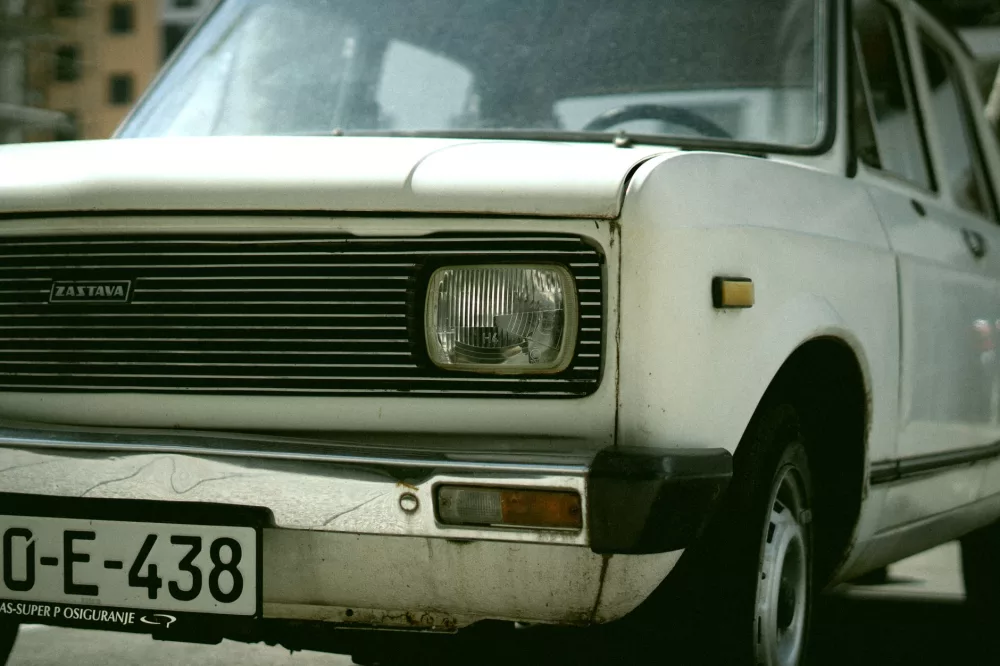
When you hear the name 'Yugo,' what's the first thing that springs to mind? For many, it's probably a chuckle, a raised eyebrow, or perhaps a memory of a rusty, broken-down jalopy. This little car, born in the former Yugoslavia and affectionately, or perhaps scornfully, known as the Yugo, has carved out a fascinating, if sometimes comical, niche in automotive lore. It often serves as a punchline rather than a serious contender, and honestly, I think that's a bit unfair to its complex story. I mean, there’s so much more to it than just the jokes, you know?
The Aspirations of Zastava: Birth in Yugoslavia
Our story starts in Kragujevac, Serbia, home to Zastava Automobili. Now, Zastava wasn't some fly-by-night operation; they'd been building cars under license from Fiat for decades, including models like the Zastava 750, which was essentially a licensed Fiat 600. They knew a thing or two about making cars, albeit basic ones. The Yugo, or as it was initially known, the Zastava Koral, was designed as a modern, small car for the domestic Yugoslavian market and for export to other Eastern Bloc nations.
Think about the context: it was the early 1980s. Yugoslavia, under Marshal Tito, was a non-aligned socialist state, somewhat distinct from the stricter Soviet-bloc countries. There was a desire to create something homegrown, something that showcased Yugoslavian industrial capability. The Yugo was supposed to be that car. It used a lot of existing Fiat parts, particularly from the Fiat 127, which made sense from an engineering and cost perspective. It was designed to be simple, economical, and robust enough for varying road conditions.
Enter Malcolm Bricklin: The American Dream for $3,990
The real twist in the Yugo's tale comes with Malcolm Bricklin. You might know his name from Subaru's introduction to the US or his own Bricklin SV-1 sports car. This guy had a knack for spotting opportunities, and in the mid-1980s, he saw a gap in the American market: an ultra-cheap, brand-new car. Inflation was a thing, cars were getting more expensive, and he figured there were plenty of Americans who just needed basic transportation without breaking the bank. So, he went to Yugoslavia.
Bricklin negotiated a deal to import the Yugo GV (Great Value) to the United States. The pitch was simple: a new car, with a warranty, for an unheard-of price of $3,990. Can you imagine that? A brand-new car for less than four grand! It sounded incredible, and for a short while, it worked. The car hit American shores in 1985, and despite its Spartan interior and somewhat agricultural driving dynamics, people bought them. In 1987, Yugo America actually sold nearly 49,000 units. That's not nothing!
What Was it Like to Drive One?
Well, to put it mildly, it was an experience. Let me tell you, driving a Yugo was definitely not about luxury or performance. It was about getting from point A to point B, period. The engines were small, typically a 1.1-liter or 1.3-liter four-cylinder, generating somewhere around 55 to 65 horsepower. Power was not its strong suit. Acceleration was, let's just say, leisurely.
What about the build quality? This is where its reputation really took a hit. You know, these were cars built on a shoestring budget in a socialist economy, and while Zastava tried its best, the quality control often wasn't up to Western standards. I've heard stories that are just wild:
- Some folks reported things like loose trim falling off.
- There were tales of electrical gremlins that could drive you nuts.
- And let's not forget the infamous timing belt issues; if that went, your engine was toast, and it seemed to happen more often than it should have.
The interior was basic, plastics were hard, and features were minimal. No power windows, no fancy infotainment, just the bare essentials. Air conditioning was an option, but it basically choked what little power the engine had. It was a no-frills machine, and while that appealed to some, the reliability issues quickly overshadowed the initial excitement of its low price.
The Punchline and Pop Culture Status
The Yugo very quickly became a comedic trope. It was the butt of jokes on late-night TV, in movies, and in everyday conversation. People would say things like, "How do you double the value of a Yugo? Fill it with gas!" Or, "What do you call a Yugo with a flat tire? A spare." Harmless fun, mostly, but it cemented its image as the worst car ever made.
I think the humor, though, often overshadowed the reality for many owners. For folks who truly needed cheap transport, a Yugo, for all its faults, was still a brand-new car under warranty. It provided mobility for those who might not have been able to afford anything else. It wasn't the greatest, no, but it was there. It played a small but significant role in the American automotive landscape for a few years.
The Demise of a Dollar Car Dream
Several factors ultimately contributed to the Yugo's downfall in the U.S. market. The initial novelty of the low price wore off as reliability issues piled up. Warranty claims became a nightmare. Then came stricter emissions and safety regulations, which the Yugo simply wasn't designed to meet without significant, costly re-engineering. It just wasn't economically viable to adapt it.
And then, the final nail in the coffin: the geopolitical situation. The breakup of Yugoslavia in the early 1990s, followed by the Bosnian War and international sanctions against Serbia, made importing anything from Zastava virtually impossible. The supply chain was broken, spare parts became scarce, and Yugo America went bankrupt in 1992. It was a rather abrupt end to a controversial chapter in automotive history.
A Quirky Place in History
So, where does the Yugo stand today? It's definitely an icon, just not in the way its creators probably intended. It's a symbol of budget motoring, a cautionary tale about quality control, and a fascinating example of how political and economic forces can shape a product's fate. I mean, despite everything, I still find it strangely endearing. It wasn't pretending to be something it wasn't; it was an honest, albeit flawed, attempt to provide affordable wheels.
Today, finding a Yugo in good condition is pretty rare, and they've even become a bit of a collector's item for those who appreciate automotive oddities and underdog stories. There are enthusiasts out there who lovingly restore and maintain them, celebrating their quirky charm. It reminds me that even cars that were widely panned can find their own dedicated following. The Yugo, for all its faults, certainly left an impression, and I think that counts for something, don't you?