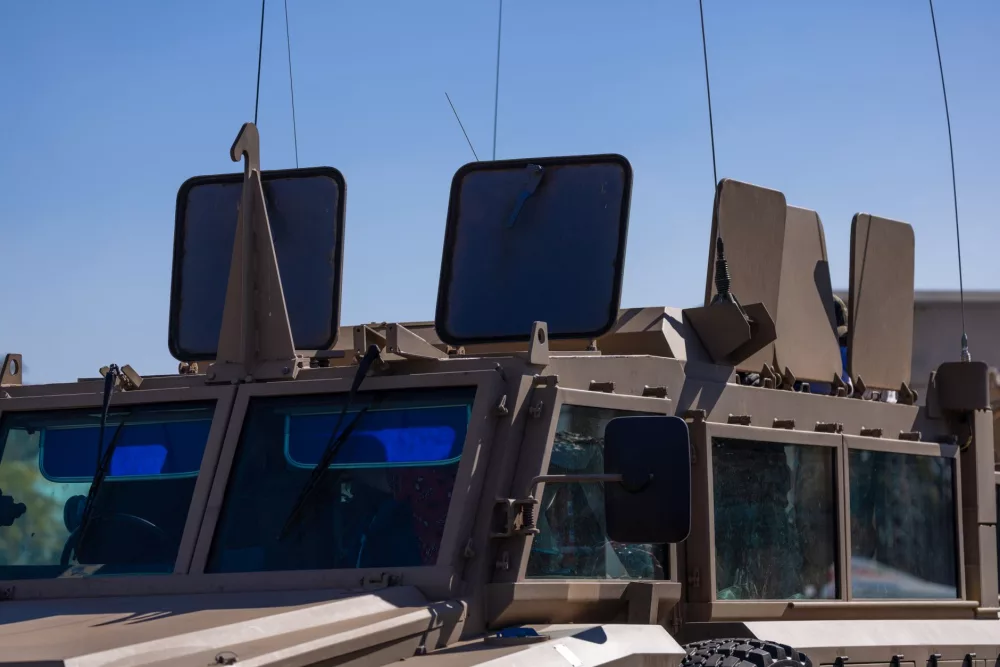
The Unseen Battlefield: What Exactly is an Army PC?
When we talk about an "Army PC," I find that most folks immediately picture something out of a sci-fi movie – maybe a super-computer that can predict enemy movements with a flash. While that's certainly exciting, the reality, as I've come to understand it, is far more grounded in the gritty, demanding world of military operations. These aren't your average desktop towers or sleek laptops; oh no, they're a whole different breed. We're talking about computing devices designed, built, and tested to withstand conditions that would turn a commercial machine into a paperweight faster than you can say "system crash." It’s fascinating, honestly, to see the engineering that goes into these things, pushing the boundaries of durability and performance.
Why Standard Computers Just Won't Cut It
You know, for us civilians, our biggest worry with a computer might be a spilled coffee or an accidental drop from desk height. But imagine a computing device needing to function perfectly in a sandstorm, a torrential downpour, or even after a significant jolt from an explosion nearby. That’s the kind of environment an Army PC lives in. I mean, we can't expect a soldier in the field to gently place their laptop on a stable surface while coordinating a critical mission. The operational demands are just too high, too unpredictable.
So, what sets these ruggedized wonders apart? It comes down to a few core areas, really. We're looking at things like extreme environmental resilience, rock-solid data security, dependable power management in remote locations, and the ability to integrate seamlessly with specialized military hardware and software. It’s a complex dance of requirements, and I think that’s what makes this niche so incredibly interesting.
Built for Brutality: The Core Features We See
When I examine the specifications of an Army PC, I often see acronyms and standards that make perfect sense in the military context but might seem a bit alien to someone outside it. They’re like a secret language telling us exactly how tough these machines are.
- MIL-STD Compliance: This is probably the big one. We're usually talking about MIL-STD-810G or even the newer 810H. These aren't just suggestions; they're rigorous testing methods for everything from shock and vibration resistance to temperature extremes, humidity, altitude, and even ballistic shock. It's a comprehensive gauntlet, ensuring the device can take a beating and keep on ticking. I've heard stories about these computers being dropped from significant heights and still firing right up.
- IP Ratings: Alongside MIL-STD, we always look for high Ingress Protection (IP) ratings. This tells us how well a device is sealed against dust and water. An IP67 or IP68 rating, for example, means it's dust-tight and can handle immersion in water for a certain period. Essential when you’re operating in a desert or a jungle, wouldn’t you say?
- Extreme Temperature Range: Think about the deserts of the Middle East or the frozen tundras of the Arctic. These machines need to operate flawlessly from well below freezing to scorching hot temperatures. This requires specialized components, innovative cooling systems, and robust enclosures that won't warp or fail.
- EMI/EMC Shielding: Electromagnetic Interference (EMI) and Electromagnetic Compatibility (EMC) are crucial. Military environments are rife with various electronic signals, and we can't have one device interfering with another, or sensitive data being compromised by external noise. These PCs often feature specialized shielding to prevent such issues, maintaining signal integrity and operational secrecy.
- Display Technology: A soldier often needs to see their screen clearly in bright sunlight or complete darkness, perhaps even while wearing night-vision goggles. So, specialized displays with high brightness, anti-glare coatings, and sometimes even NVIS (Night Vision Imaging System) compatibility are absolutely critical.
It's not just about surviving, though; it’s about performing under duress. That’s where the processing power and specialized software come into play.
Beyond the Brawn: The Brains of the Operation
While durability is non-negotiable, an Army PC is also a sophisticated computing platform. It's got to handle complex tasks, sometimes at the edge of the network, with minimal latency.
Data Security: A Paramount Concern
Security on an Army PC isn't just about antivirus software; it’s multilayered and deeply embedded. We’re talking about hardware-level encryption, tamper-proof designs, secure boot processes, and often, features like self-destruct mechanisms for data in case of capture. I mean, imagine the consequences if sensitive operational data fell into the wrong hands. It's a truly chilling thought, which is why these systems are fortified against every conceivable cyber threat.
Connectivity and Integration
These machines need to talk to a lot of other things: radios, sensors, drones, vehicles, other command centers. So, they feature a robust array of I/O ports, often ruggedized and sealed themselves, supporting military-specific connectors alongside standard ones. Wireless capabilities are also highly advanced, often including multiple forms of GPS, satellite communication, and secure Wi-Fi/cellular options, all designed for reliable, uninterrupted communication even in contested environments. We often see modular designs here too, allowing for specific add-ons or upgrades depending on the mission.
Where These Machines Serve
You might be wondering where exactly these rugged marvels get used. The applications are incredibly diverse, reflecting the varied needs of modern military operations.
- Field Operations: From tactical laptops used for mission planning and data collection to handheld devices for communication and navigation, these are the frontline workhorses. I always imagine them getting the brunt of the abuse here.
- Vehicle Integration: Inside tanks, armored personnel carriers, and other military vehicles, these PCs serve as command and control centers, managing weapon systems, communications, and situational awareness displays.
- Command Centers: Even in more static environments, a certain level of ruggedness is often required, particularly for deployable or mobile command units.
- Drone and Robotics Control: As robotic warfare evolves, rugged PCs are essential for operating and analyzing data from unmanned systems, whether on the ground or in the air.
- Logistics and Maintenance: Keeping track of supplies, performing diagnostics on complex machinery, and managing personnel all require reliable computing, often in less-than-ideal conditions.
- Training Simulations: While perhaps not subjected to the same physical abuse, simulators often use military-grade components to ensure reliability and accurate replication of field conditions.
It's clear to me that these specialized computers are absolutely integral to nearly every facet of modern defense. They aren't just tools; they're enabling technologies.
The Real-World Hurdles We Face
Developing and deploying Army PCs isn't without its challenges, believe me. One significant hurdle is the constant push-pull between cutting-edge technology and established military standards. New processors come out every year, but qualifying a new component for MIL-STD compliance can take a long time and cost a lot of money. So, sometimes, the military is running on slightly older, but thoroughly proven, tech.
Cost is another huge factor, as you might expect. All that ruggedization, shielding, and specialized testing adds up. These aren't cheap machines by any stretch of the imagination. And then there's the logistical nightmare of maintenance and support in austere environments. Getting spare parts or a qualified technician to a remote forward operating base isn't like calling IT support at your office.
Looking Ahead: The Future of Military Computing
I think the future of the Army PC is going to be incredibly dynamic. We're seeing trends towards even greater miniaturization and modularity, allowing soldiers to custom-build their computing platforms for specific missions. Energy efficiency is also a huge focus; battery life is a constant concern in the field, so new power management techniques and alternative energy sources are being explored.
Artificial intelligence and machine learning are going to play an even bigger role, I believe, helping with everything from predictive maintenance to real-time threat assessment. And, of course, the cybersecurity landscape continues to evolve, pushing for quantum-resistant encryption and even more resilient systems. It’s an exciting time, really, to watch this technology advance, adapting to the ever-changing demands of defense.
Ultimately, when we talk about an Army PC, we’re not just discussing a piece of hardware. We’re looking at a critical component of national security, a device engineered with an unwavering commitment to reliability, performance, and soldier safety, no matter how tough the situation gets. And that, to me, is something truly remarkable.